Bleeding for Clicks: The Dark Side of Turning Your Pain Into Content
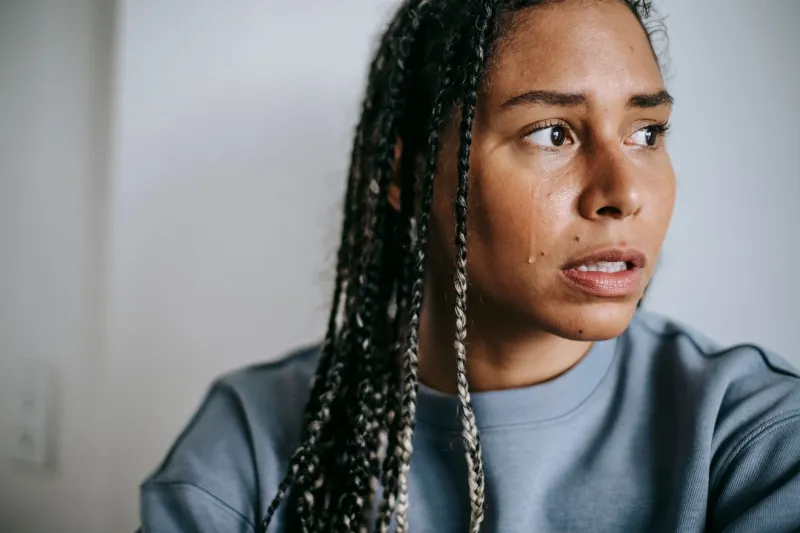
The Post That Almost Wasn't
A few years ago, I sat in a parking garage for forty-five minutes after receiving news that wrecked me. And somewhere in the middle of the crying, the shaking hands, the whole ugly mess of it — I thought about my audience. I thought about the caption. I thought about whether the lighting from the concrete overhead was enough to film a tearful video.
I didn't post it. But the fact that I almost did? That still haunts me.
We've built an internet culture that rewards rawness. And on the surface, that sounds beautiful. Vulnerability is connection, right? Brené Brown built an entire empire on that idea. But somewhere between the TED Talk and the algorithm, something got twisted. What started as an antidote to polished, unreachable perfection has morphed into its own performance standard — one where the tears need to be timely, the breakdowns need to be bookended with lessons, and your worst moments need to pull their weight in engagement metrics.
When Authenticity Becomes a Genre
Here's the uncomfortable truth: there's a version of "being real" online that isn't real at all. It's a highly produced simulation of realness. The creator who films themselves crying at 2 a.m. has still chosen the angle. Still picked the song for the background. Still decided which part of the story to tell — and which part to keep.
None of that makes them a liar. But it does make them a performer. And the problem isn't the performance itself. The problem is when we stop being able to tell the difference — including from the inside.
I've watched creators I genuinely admire go through what I can only describe as a vulnerability arms race. Each confession gets a little more intimate. Each struggle a little more severe. The audience, conditioned to expect access, starts to feel entitled to it. And the creator, conditioned to deliver, starts mining deeper and darker corners of their life for content. It's a cycle that ends badly for everyone, but it ends worst for the person doing the mining.
The Ethics Nobody's Talking About
Let's be direct: there are real ethical questions at the center of this conversation that the creator economy tends to dodge.
When you share your grief for engagement, who does that serve? Sometimes, genuinely, it serves your audience — people who feel less alone in their own pain because they watched you navigate yours. That's not nothing. That's actually something sacred. But when the motivation is primarily about the numbers? When the vulnerability is timed to a launch, or deployed strategically after a period of silence? That's a different thing entirely, and pretending otherwise is its own kind of dishonesty.
There's also the question of the other people in your story. Your messy divorce, your estranged parent, your health scare — those narratives involve real human beings who didn't sign up to be characters in your content. The creator economy has been remarkably slow to grapple with this, and audiences are only just beginning to push back.
Practical Ways to Protect Yourself (And Your Audience)
So what does a healthier approach actually look like? Here's what I've landed on after years of figuring this out in real time.
Give it the 72-hour rule. Before you share anything emotionally raw, wait three days. If it still feels important and purposeful after 72 hours — not just reactive — then it might be worth sharing. Most of the time, the urgency dissolves. That's information.
Ask whose story it is. Before you post about a painful situation, genuinely consider who else is in that story. Do they have any say? Would they be blindsided? You don't owe your audience access to other people's lives just because those lives intersect with yours.
Separate the experience from the content. You are allowed to go through something fully, privately, and then — later, with distance — decide whether any part of it is worth sharing. Living a moment and documenting a moment are two different acts. You don't have to do them simultaneously.
Know why you're sharing. This one requires radical honesty with yourself. Is this post for your audience, or is it for your analytics? Is it connection, or is it coping? Both can coexist, but you need to know the ratio before you hit publish.
Reserve a category of things that are just yours. Some grief, some joy, some love — it doesn't have to be content. You're allowed to have a life that your audience doesn't get to see. In fact, protecting that private interior is what makes everything you do share feel genuine rather than exhausted.
The Connection That Actually Lasts
Here's what I've come to believe: the most durable connection between a creator and their audience isn't built on maximum exposure. It's built on consistent truth. And truth doesn't require you to bleed out publicly every time something goes wrong.
You can be honest without being transparent about everything. You can be relatable without being an open wound. You can build a community that trusts you deeply — not because you gave them access to your worst moments, but because you showed up with integrity about what you chose to share and what you chose to protect.
The creators I respect most aren't the ones who've shared the most. They're the ones who seem to know the difference between sharing and oversharing, between connection and performance, between a story that's ready and one that still needs to be lived.
That parking garage moment? I'm glad I didn't post it. Not because it wasn't real — it was the realest thing I felt that year. But because it was mine. And some things get to stay that way.