The Night Everything Fell Apart Onstage — And Why I'd Live It Again
I used to think success was the best teacher. Turns out, I was completely wrong about that.
The night I'm about to describe isn't one I'd normally lead with at a dinner party. It's not the kind of story that makes you look cool or polished or like you've got it all figured out. But it's probably the most honest thing I can share with you right now — and if you've been following along here for any amount of time, you know that honest is kind of the whole point.
So. Let's talk about the night I bombed. Publicly. Spectacularly. In front of what felt like every pair of eyes in the room.
Setting the Scene
It was a live showcase — the kind of event where the energy in the room is electric before you even open your mouth. Thousands of people. Expectations high. My own expectations even higher. I'd been building toward this moment for months, rehearsing the set, curating every detail, telling myself this was going to be the one — the performance that finally made everything click into place.
I walked out there feeling ready. Genuinely ready. And for about ninety seconds, it was everything I imagined.
Then something shifted. I stumbled over a transition I'd done a hundred times in rehearsal. I recovered — or I thought I did — but the stumble rattled something loose inside me, and suddenly I was in my own head in the worst possible way. You know that feeling where you're watching yourself from outside your body and thinking oh no, this is going sideways? That was me. In real time. In front of thousands of people.
The technical word for what happened next is "unraveling." My word for it at the time was significantly less polished.
What the Silence Actually Sounds Like
Here's what nobody tells you about bombing live: it's not always loud. There's no dramatic booing, no tomatoes thrown (thank God), no one storming out in protest. Sometimes the worst response is just... quiet. A kind of held-breath stillness from the audience that you feel in your chest before you consciously register it.
That silence is its own kind of feedback. And in the moment, it feels like the end of the world.
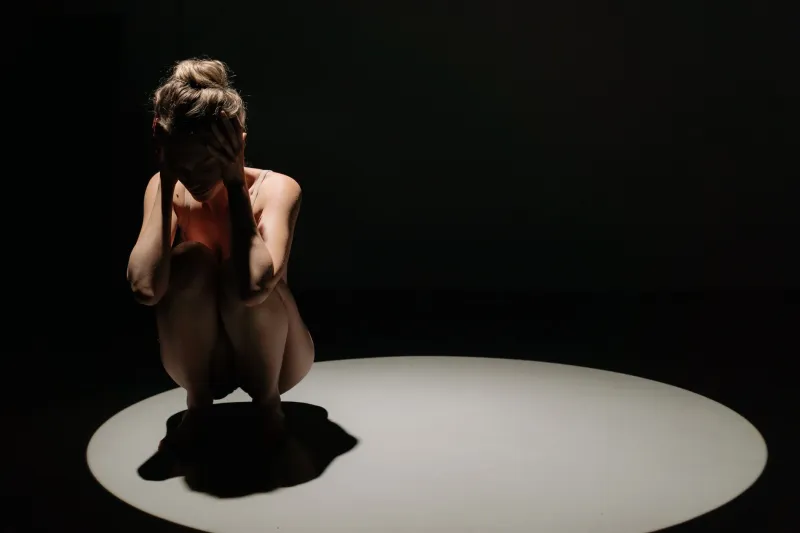
I pushed through the rest of the set. Not gracefully — more like someone crawling across a finish line — but I finished. And when I walked off that stage, I genuinely didn't know what to do with myself. I found a corner backstage, sat down on the floor, and just stayed there for a while.
I won't pretend I was immediately zen about it. I was embarrassed. Frustrated. Running through every single thing I could have done differently. The internal monologue was not kind.
The Part That Surprised Me
Here's where the story takes a turn I didn't see coming.
After the event, people came up to me. Not to offer polished compliments or the kind of performative encouragement that people dish out when they don't know what else to say. They came up to tell me they related to what they'd watched. One woman told me she'd been holding her breath for me and that watching me push through had genuinely moved her. A guy said it was the most human thing he'd seen at a live event in years.
I didn't know how to process that at first. Because in my mind, I had failed. But in their experience, they had witnessed something real.
That gap — between what I thought they saw and what they actually received — is something I've been turning over in my mind ever since.
What Failure Actually Teaches You
Perfection, it turns out, creates distance. When everything goes exactly right, there's a kind of invisible glass between the performer and the audience. It's impressive, sure. But it's also untouchable. And untouchable doesn't always mean connected.
When things go wrong — when the mask slips and the seams show — something else happens. People lean in. Not because they enjoy watching someone struggle, but because struggle is something every single person in that room has felt. It's the most universal human experience there is.
My stumble that night wasn't a performance choice. It wasn't calculated vulnerability or a strategic moment of relatability. It was just... real. Messy and real. And somehow, that realness landed harder than anything polished I'd done before.
I also learned something about my own resilience that I couldn't have learned any other way. You don't know what you're made of until you're mid-fall and you have to decide whether to stop or keep going. I kept going. It wasn't pretty. But I kept going. And there's something quietly powerful about knowing that about yourself.
The Gratitude Part (Which I Know Sounds Wild)
I genuinely mean it when I say I'm grateful it happened. Not in a performative, "everything happens for a reason" kind of way — I'm not that person. But in a very concrete, specific sense.
That night stripped away a fear I'd been carrying for years: the fear of public failure. Once you've lived through the thing you were most afraid of, it loses its grip on you. I stopped performing with that low-level dread humming underneath everything. I stopped making safe choices just to protect myself from the possibility of stumbling.
And weirdly? My work got better. Looser. More alive. Because I wasn't spending half my energy managing the risk of imperfection.
What I Want You to Take From This
If you're someone who creates — whether that's performing, writing, building a brand, showing up on social media, or just showing up in your own life — you're going to have a night like mine eventually. Maybe you already have.
I want you to know that it doesn't define you. But it will shape you, if you let it.
The people who were paying real attention that night didn't remember my stumble as a failure. They remembered it as a moment. And there's a difference between those two things that I think matters a lot.
Living out loud — which is kind of the whole thing I'm trying to do here — means accepting that some of those loud moments are going to be uncomfortable. Some of them are going to be the nights where nothing goes right and you end up sitting on a backstage floor wondering what just happened.
Those nights are part of it. Maybe the most important part.
I wouldn't trade that night for anything.